Clear space, no grain added.
Shunya adds no saturation, drive or converter grain of its own. Six units fitted to the measured behaviour of classic reverbs, three slots you can chain, wet EQ, presets and A/B.
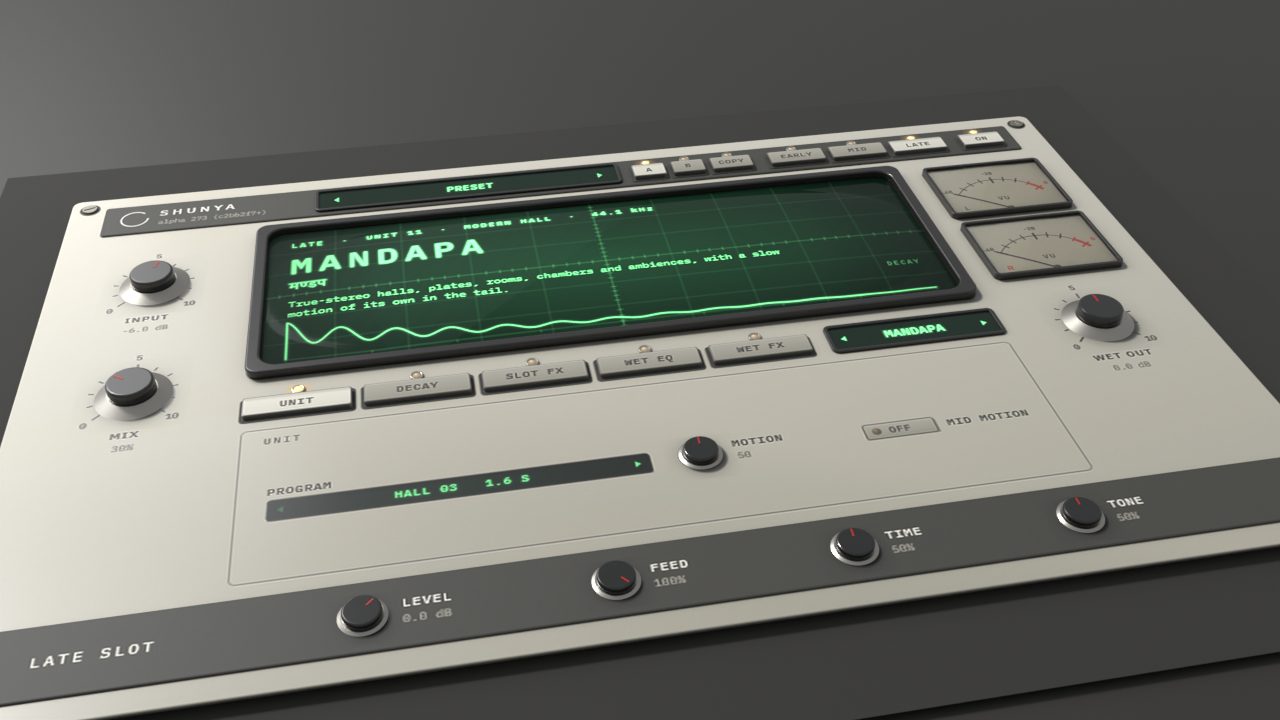
Graticule skin · Mandapa on the tube · 3D render
Six spaces, one clean path.
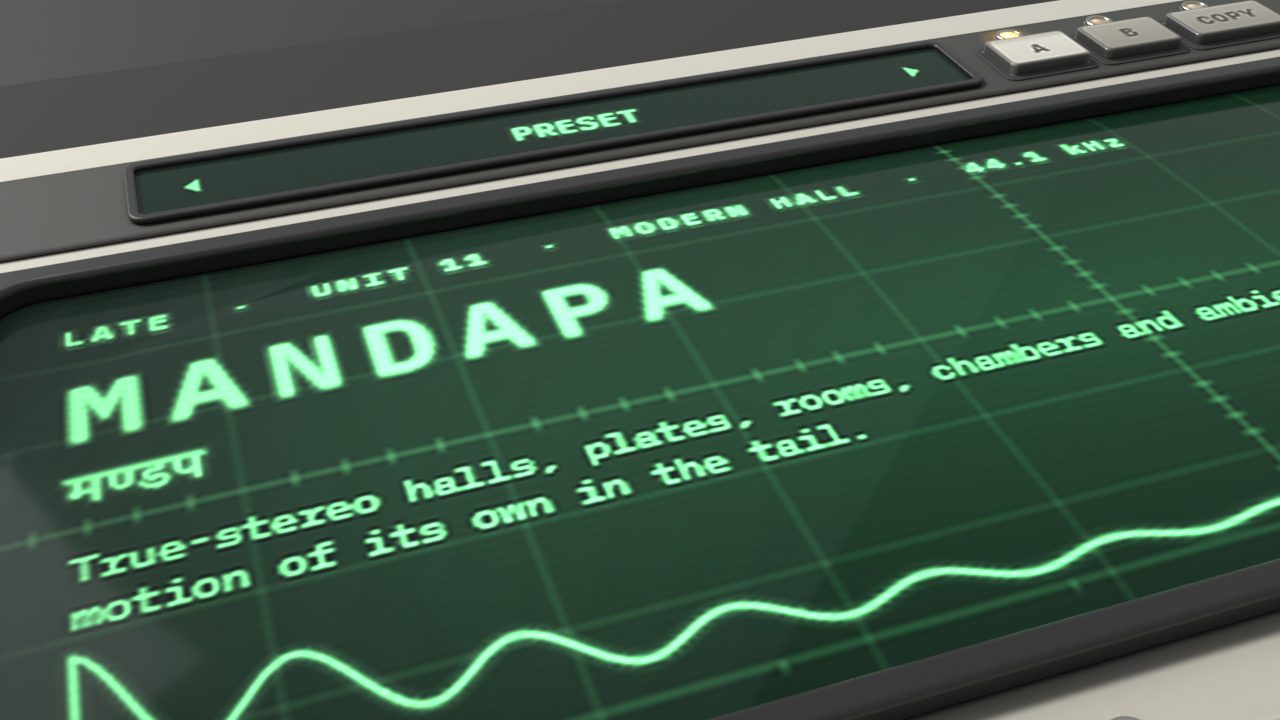
Mandapa
Hall, plate, room, chamber, ambience and space programs in true stereo, with a Motion control for the tail.
True stereo · MotionVistara
Six algorithms: Hall, Random Hall, Plate, Ambience, Rich Plate and Concert Hall, with size, pre-delay and diffusion controls.
6 algorithmsTaranga
11 reverb types, from halls and rooms to a sheet, a tube and a cellar, plus 8 chorus types.
11 reverbs · 8 chorusesDhvani
Eight types of room, stage, hall and echo, with delay feedback and three chorus types. The chorus can feed the reverb.
Chorus → reverbKosha
Chambers, halls, a sheet and echoes, with eight chorus types and a send that feeds the chorus into the reverb.
Chorus → reverbChatur
Rooms, sheets and shaped programs, plus Backward Swell and Gate Burst: 10 programs in all.
10 programsThree slots
Early, Mid and Late each hold any unit and feed the next, so you can chain a room into a hall. After them: a four-band wet EQ, presets and A/B.
Early · Mid · Late · A/BHear it, dry and through Shunya.
Press play, then switch between Dry and Shunya. Both are matched in loudness, so you hear the change, not the volume.
Measured, not described.
Each plot is measured offline from the plugin at 48 kHz. Settings are listed under each one.
Pick a finish.
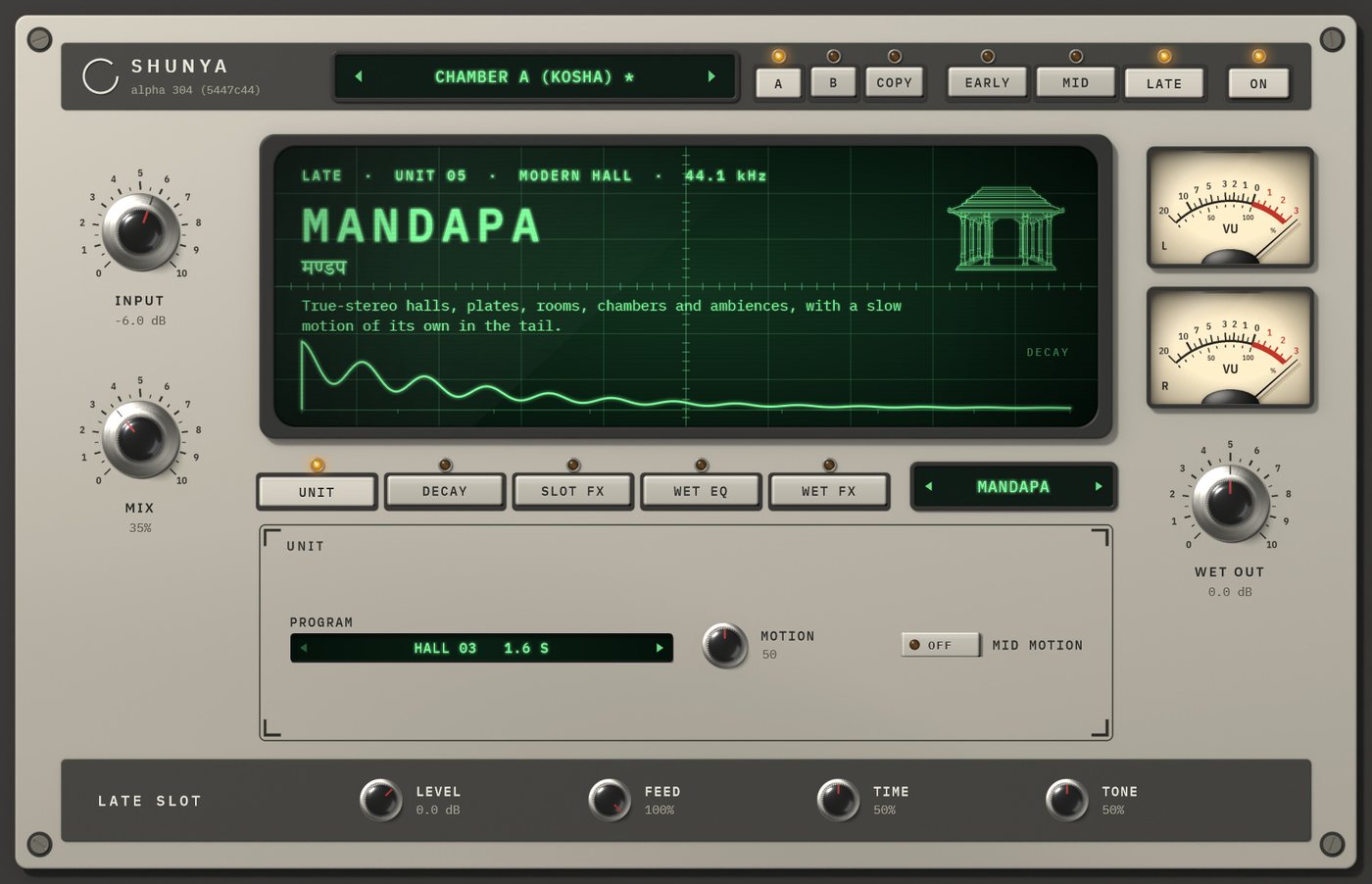
Every skin, captured from the plugin itself. Pick one to see it.
Want to try Shunya?
Trial coming soon
VST3 · Windows 64-bit